
Palm Desert Directory Collections
Verified sources show a fragmented Palm Desert city directory landscape. The most specific local layer is the Historical Society of Palm Desert archive, while the older county volume supplies regional context. The library catalog is the right place to ask about current and legacy holdings, but the library does not publish a complete year-by-year inventory of local directories. The table keeps known material separate from a collection that still needs confirmation.
| Collection | Years or span | Where held | Access |
|---|---|---|---|
| History and Directory of Riverside County, 1893-4 | 1893-1894; 1992 facsimile | FamilySearch catalog | Catalog access may require login or location |
| Historical Society oral histories | Dates vary | HSPD digital archives | Online interviews and transcripts |
| Hourglass newsletters | Early local run; exact years not stated | Historical Society | Digital collection and archive help |
| Sun Spots and Shadow Mountain Club newsletters | Exact years not stated | Historical Society | Digital collection; verify access |
| Palm Desert Library catalog | Current and legacy holdings unenumerated | 73-300 Fred Waring Drive | Search title, author, or keyword; ask staff |
A Palm Desert directory entry should carry its own volume date and geography. The 1893-94 county book predates the city and cannot be presented as a Palm Desert street list. The HSPD newsletters can add names and social context, but they are not a substitute for a household directory.
Palm Desert Before Directories
Palm Desert incorporated on November 26, 1973, but people and parcels in the area already appeared in Riverside County, Palm Village, Palm Desert development, Palm Springs, Indio, and Coachella Valley records. A Palm Desert city directory search that begins only in the modern city name can miss the period when a household was recorded under a regional heading.
The Henderson brothers organized the planned town in 1945-46, the post office opened in 1947, and the 1948 Desert Magazine Building helped create a local print and community hub. By 1953, Palm Desert had 30 miles of roads, more than 150 homes, and 14 hotels. These details show why an early directory or newspaper trail may be regional rather than municipal.
Palm Desert's first city hall used William Krisel's Sandpipers sales office at El Paseo and Highway 74. That story is more than color. It points researchers toward development files, county records, club papers, and local newsletters when a formal directory is absent.
Palm Desert Directory Sources
Palm Desert Library became a city-operated library on July 1, 2024. Its catalog and reference desk now anchor local questions, while older material can remain in Riverside County or regional partner systems. The Historical Society at 72-861 El Paseo Drive accepts archivist appointment requests and publishes oral histories, early Hourglass material, and Shadow Mountain Club newsletters. Its seasonal public hours are October through May, Friday through Monday, 10-3.
The Historical Society archive access page is the best verified local archive doorway. Call 760-346-6588 or email info@hspd.org to ask about a name, address, year, publisher, street section, or scan. The Palm Desert Library catalog lists title, author, and keyword search, with Sunday through Saturday hours posted on the library site.
The archive view below is a useful reminder that local history may be digitized as interviews and newsletters rather than as a bound directory.
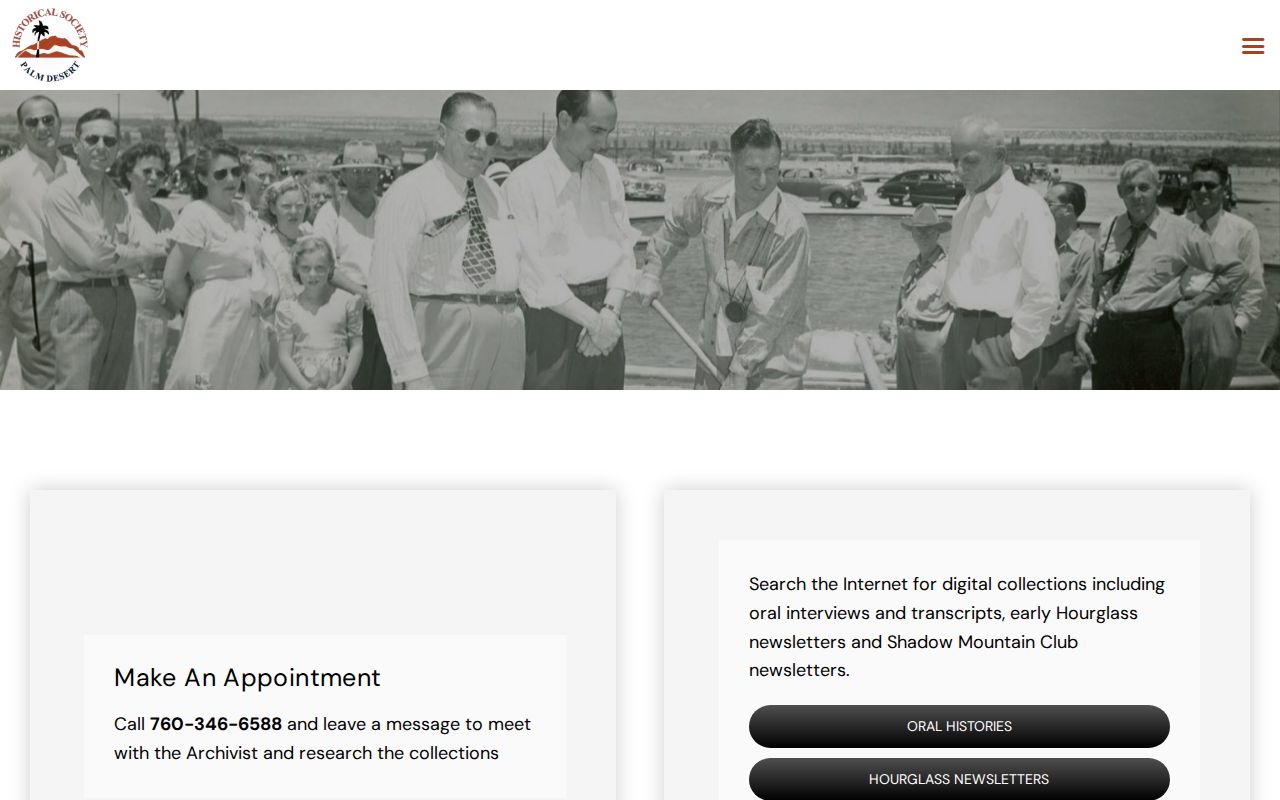
HSPD material can supply a nickname, club link, address clue, or date that makes a later formal index search more precise.
Palm Desert Directory Run
No assigned official source establishes a Palm Desert-specific Polk, telephone, or reverse-directory publisher and year run. No authoritative local page inspected for this research exposes a complete shelf list or a real Palm Desert sample entry. That gap belongs in the search plan. It is not a reason to invent dates, claim a microfilm set, or say that a volume is online when only a catalog record exists.
Ask the library or archivist for each annual date, publisher, geography, alphabetical section, householder or street section, telephone fields, abbreviation key, and scanning rule. Search under Palm Springs, Indio, Coachella Valley, and Riverside County as well as Palm Desert. A volume can be useful even when its cover names a wider region.
Research gap. A catalog search can establish that a title is described somewhere, but only the custodian can confirm shelf access, page coverage, image rights, and the exact fields in a Palm Desert directory.
Palm Desert Directory Entry
The Library of Congress describes city directories as personal and professional reference works arranged by surname and sometimes by address or telephone. A generic field model helps plan a Palm Desert directory search, but the printed abbreviations and symbols must be checked in the actual local volume. Do not copy a field from the generic model into a Palm Desert conclusion without seeing the page.
| Entry clue | How to treat it |
|---|---|
| Printed name | Transcribe surname, given name, initials, and spelling variants exactly. |
| Spouse or family note | Parentheses, widow marks, or cross-references may identify a household link. |
| Trade or public role | Use it as an identity clue, not as proof of a home address. |
| Residence address | Compare the number and street with parcel and deed evidence. |
| Owner or occupant mark | Record the symbol only after the volume's key defines it. |
- Criss-cross section
- An address-first or street-order section that follows a building or street instead of a surname.
- Householder index
- A name or household entry used to locate a residence in a directory or census-like work.
- Abbreviation key
- The volume's own explanation of short forms, marks, role codes, and address symbols.
Palm Desert Directory Sequences
A name-first sequence helps follow one person across available Palm Desert city directory years. An address-first sequence helps test who appeared at a parcel or street number. The two sections do different work. A person can be absent because a survey missed the household, the family was seasonal, the name was abbreviated, or the volume covered another place label. An address entry can show an occupant without showing the title holder.
The Library of Congress city-directory guide explains the broad history and arrangement of the form. Use it for method, then ask the Palm Desert custodian for the local volume's own key. The guide image below is not a Palm Desert directory scan; it is a reference for how directory systems were organized.
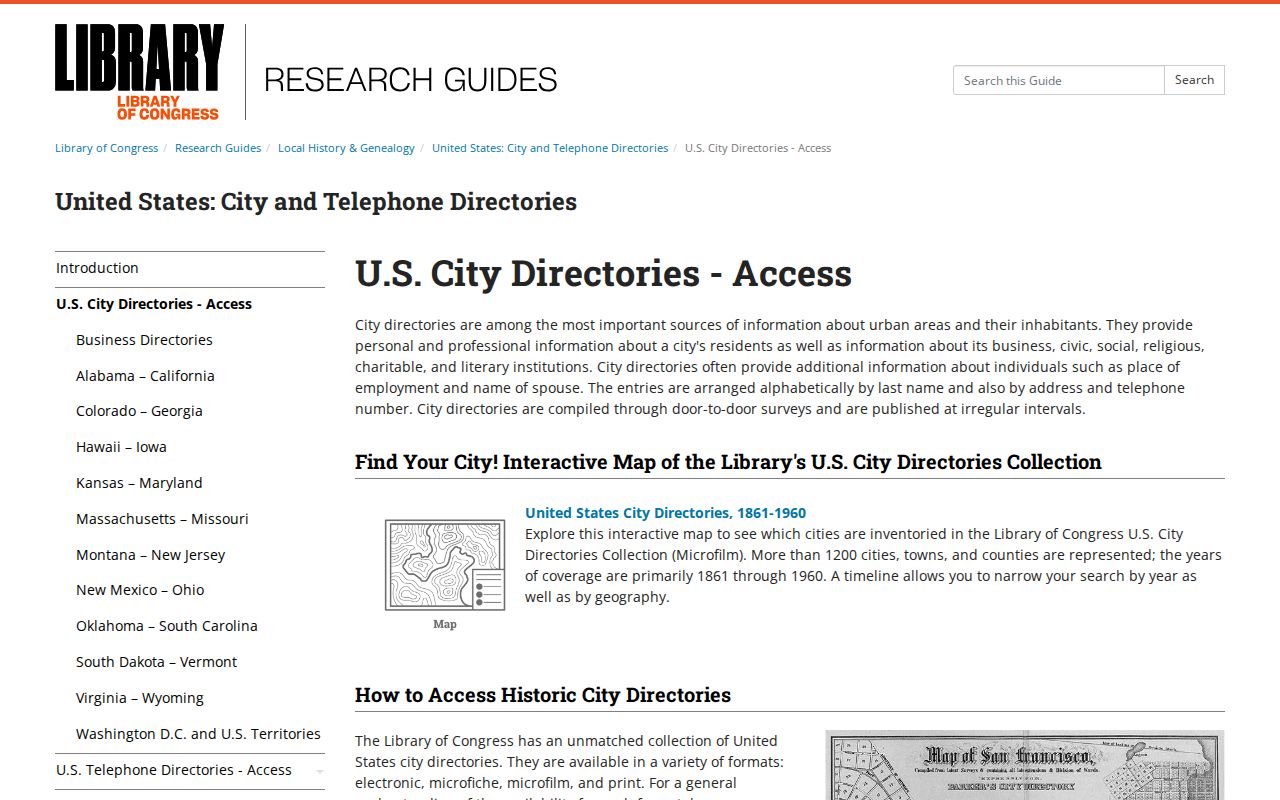
The image helps separate a general directory model from the local fields that still need verification.
Palm Desert Oral History Leads
Historical Society oral histories can solve a problem that a name index cannot. A transcript may contain a nickname, a club tie, a seasonal residence, a development name, or the story of a business on El Paseo. Those details can identify the right spelling or date for a directory search. They can also explain why the same household appears under Palm Springs, Indio, or a development label.
Use an oral history as a lead, then test it against a deed, court record, vital copy, newspaper item, or dated directory entry. The archive's early Hourglass and Shadow Mountain Club newsletters are especially relevant to the resort and community network that shaped early Palm Desert. A community mention is valuable context, but it is not a certified proof of residence.
The local archive's digitization partnership with the California State Library also explains why a Palm Desert clue may appear outside the city library catalog. Search the partner description, then ask HSPD where the source copy is held.
Palm Desert Directories and 1950 Census
Federal census schedules are public through 1950 under the 72-year access rule as of the research date. A directory and a census can provide different views of the same household. The directory may offer an address, spouse mark, trade, or telephone clue. The census may show household relationships at the enumeration address. Neither should be treated as a complete modern Palm Desert resident roll.
| Sequence | Research action |
|---|---|
| Place first | Search Palm Desert, Palm Village, Palm Springs, Indio, and county labels for the year. |
| Directory next | Record name, address, spouse clue, role clue, and every abbreviation. |
| Census check | Compare household members and enumeration geography through the latest open schedule. |
| Later proof | Use deed, probate, obituary, archive, or vital evidence for a dated event. |
Palm Desert's incorporation came after the latest open census, so older research needs enumeration-district and predecessor-community care. A directory gap may reflect a change in place name rather than a missing family.
Palm Desert Business Records
Public business records can help distinguish two people with the same name when a city directory is missing. Palm Desert licensing, Riverside fictitious-business-name records, California Secretary of State filings, and UCC records answer different questions. A city license points to local activity. An FBN connects a trade name to a registrant. A state filing describes a legal entity, agent, address, and imaged statements. None alone proves a private residence.
The free California UCC search uses debtor name or file number and has its own image and certificate fees.
The UCC screen is a separate filing layer, so its name and address should not be mistaken for a city directory entry.
The California SOS Business Search can show entity name and number, status, jurisdiction, addresses, agent information, due dates, and imaged filings. Its result detail is useful when an old directory lists a business connection but not enough household detail.
State filing images can add a date or affiliation that helps separate a Palm Desert name from another person with the same spelling.
Palm Desert Directories for Families
A family-history search works best when each directory year is treated as a dated snapshot. The goal is to build a sequence of clues, not to make a single printed line carry more weight than it can. Pair a name-first search with an address-first search when the volume provides both. Keep the original spelling, place label, and symbol key in the notes.
- Set the geography and year. Before 1973, include the wider valley and Riverside County in the search terms.
- Find the surname and initials, then record spouse, address, trade or public role, and any cross-reference exactly as printed.
- Check the street or criss-cross section if it exists, and note nearby entries without assuming they are family or neighbors.
- Pair the directory snapshot with the 1950 census, a newspaper, an obituary, a deed, probate file, or oral history.
- Use the originating archive or custodian to resolve a scan, abbreviation, date, or copy question.
A disappearing entry can mean a move, death, changed spelling, missed survey, seasonal absence, or a change in geographic label. The Palm Desert resident lookup route helps when a historic clue needs modern identity verification, while the directory itself remains the historical shelf.