
How Palm Desert Residents Are Found
Palm Desert residents appear in different records for different reasons. A parcel record can connect a situs address to an assessment parcel and a taxable owner. A deed index can show parties to a recorded instrument. A court file can show a case role. A voter-status result belongs to the voter who authenticates it. A city directory or archive can place a household in an earlier year. None of those sources alone proves that a particular person lives at a Palm Desert address today.
A sound search moves from the strongest known key to a second source. Start with an address when an address is known. Start with a name when a court, deed, business, or license record is the better fit. Keep the record type, date, party role, and geography beside each result. That habit prevents a Palm Desert owner, seasonal resident, former occupant, and registered voter from being treated as the same category.
- Resolve a known address through the Riverside County Assessor property search or Map My County, then save the APN, PIN, and legal-description clues.
- Use the Riverside Assessor office procedure when an owner name is needed, because the public web form does not offer an owner-name search.
- Search the Riverside official-record index by party name, date, and document clues, then match the deed description back to the parcel.
- Use the California voter-status tool only for a person's own authenticated record, and use the approved voter-file route only for a statutory purpose.
- For older households, move to Palm Desert Library, the Historical Society of Palm Desert, newspapers, census schedules, or a focused records request.
Palm Desert Records Desks
Palm Desert is an incorporated Riverside County city, so records are split among City Hall, the county Assessor-County Clerk-Recorder, Riverside Superior Court, and California agencies. The right desk depends on the fact being checked. The City Clerk handles municipal agendas, minutes, ordinances, permits and California Public Records Act requests. Riverside County handles property, recorded documents and county vital copies. The court holds case files. State systems handle statewide vital, license, business, custody, and voter rules.
Palm Desert City Clerk
73-510 Fred Waring Drive
Palm Desert, CA 92260
760-346-0611
Riverside County ACR
Recorder, Clerk, and Assessor
Palm Desert counter available
Assessor 951-955-6200
Riverside Superior Court
Palm Springs and Indio branches
Case and copy channels
Public portal access
California State Offices
Vital, voter, license, and privacy records
Statewide systems and forms
Rules vary by record
Counter service, mail forms, public-viewing computers, library help, and archive appointments remain important when a web index is narrow. A Palm Desert records trail is strongest when the source is named rather than described as a generic people list.
The Riverside official-record name search shows the county's party-and-date starting point.
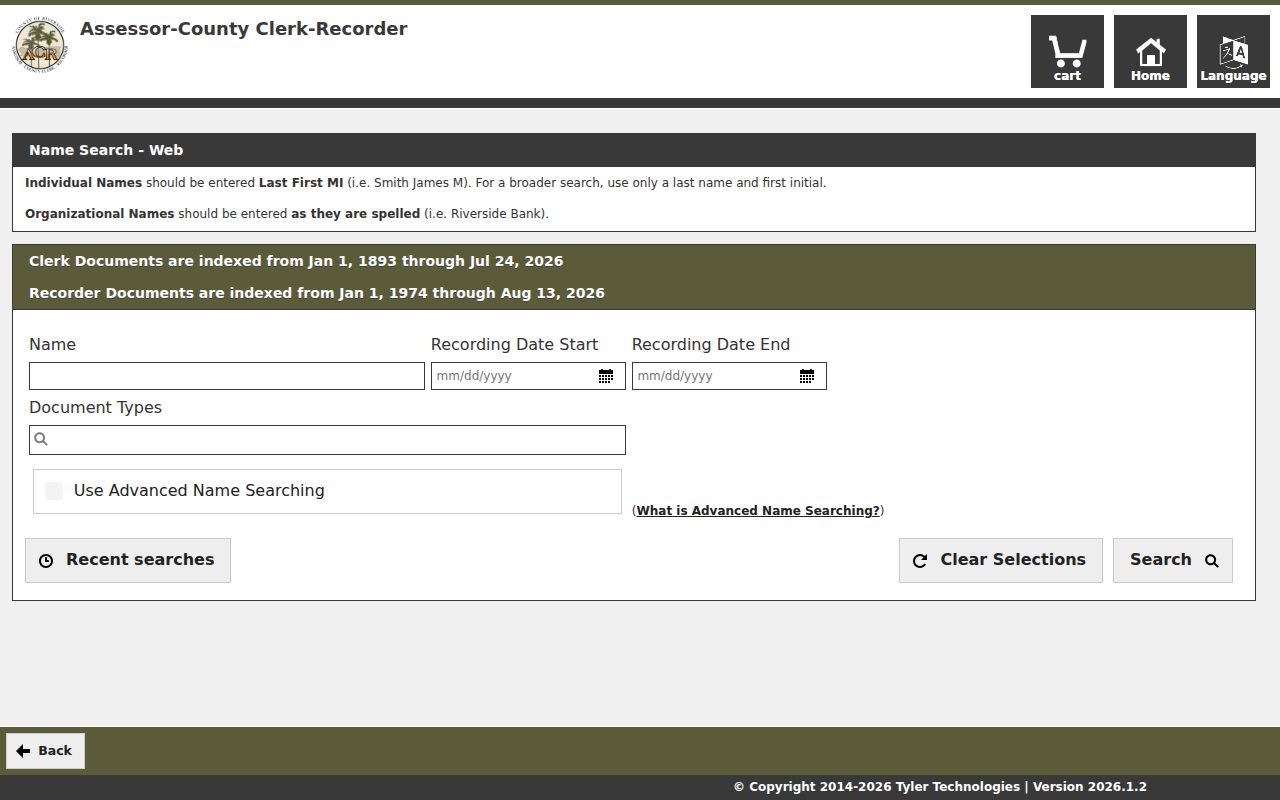
The index image is a lead for a deed or clerk record, not a substitute for the ordered official copy.
Riverside Property Search Keys
The Riverside County Assessor Online Services Property Search is the main address-to-parcel bridge for Palm Desert. It accepts one of three documented keys. The public interface does not expose a general owner-name mode, so a person-first search should usually move to recorded documents, business records, court records, or an assessor-office roll procedure instead of guessing at a web form.
| Search field | What the Palm Desert search requires |
|---|---|
| APN | Use the nine-digit assessor parcel number and preserve leading zeroes. |
| PIN / Assessment number | Enter the first nine digits only; omit the dash and final digit. |
| Property address | Street number plus street name gives the best documented result format. |
The Riverside Assessor property search can expose parcel facts, legal-description clues, values, and related property links. An owner name may require the assessor office's public-roll procedure. Map My County also marks its Parcel Owner query as county use only, which is a useful warning about what an open map can and cannot return.
Palm Desert Recorder Trail
Riverside County's official-record index is name and date keyed. Recorder documents appear online from January 1, 1974, while Clerk documents are shown from January 1, 1893. Another county instruction says office computers reach 1975 and that pre-1975 work goes through Gateway Riverside. Those statements describe different access points, so they should be retained rather than collapsed into one neat cutoff.
A current deed search can identify a document number, date, party, and legal description. The grantor and grantee roles then help trace the next instrument. Copies are a separate step. The county lists $8 for the first page, $1 for each additional page, $2 for certification, a 2.15 percent online card fee, and an average online processing time of 48 hours. Mail requests can use a document title, party names, estimated date, and parcel clues; pre-1976 mail research is limited under the county's instructions.
For Palm Desert land that predates the online window, use the Riverside copy and historical-record instructions, the Palm Desert counter at 38-686 El Cerrito Road, or the Gateway Riverside route. A web result is an index lead. The official image or office-held book is the record to verify.
Current Palm Desert Residents Directory Sources
Current Palm Desert directory work is a comparison of custodians, not a promise that one roll names every household. The sources below answer distinct questions and have different access limits.
| Source | What it can show | Keeper | Access path |
|---|---|---|---|
| Assessor parcel search | Situs, APN, parcel facts, assessment details | Riverside Assessor | Free web search by APN, PIN, or address |
| Recorded-document index | Parties, dates, instrument and deed leads | Riverside ACR Recorder | Free index; paid copies |
| City Clerk records | Names in agendas, minutes, appointments, and filings | Palm Desert | Portal or CPRA request |
| Voter status | One voter's own registration and election details | California SOS | Authenticated self-lookup |
| Permit files | Project, parcel, applicant, and dated work clues | Palm Desert DSC | Clariti or staff request |
Owner, applicant, voter, permit contact, and occupant are not interchangeable labels. A parcel can establish land identity while a court, vital, business, or archive record supplies an independent person clue. The Palm Desert resident lookup route is useful when the search shifts from a place to one person.
Palm Desert Voter Records
California's My Voter Status tool is an authenticated self-lookup, not an open Palm Desert resident directory. It asks for a first name, last name, full birth date, and either a California driver license or identification number, the last four Social Security digits, or the available alternative. A successful result can show registration locality, party and language preferences, polling information, county contact, and ballot status for the voter who signs in.
| Field | Documented purpose |
|---|---|
| First and last name | Must match the user's registration record. |
| Date of birth | Month, day, and year are required. |
| DL or ID / last four SSN | Conditional identity match, with a no-identifier option. |
California Elections Code controls voter-file access. Home street address, phone, email, precinct number, and prior-registration information are protected except for approved disclosure. An authorized request needs a purpose, jurisdiction, security plan, and supporting material. The voter-file application lists $15 per 1,000 records, a $15 minimum, a $100 cap, and $30 for a specific voter record within the stated limits. That is not a casual way to build a Palm Desert block list.
Palm Desert Court Records
Palm Desert matters go to Riverside Superior Court after California's municipal-court unification. The Riverside portal covers civil, criminal, traffic, family, and probate matters, but coverage and access change by branch and case type. Palm Springs civil and small-claims material reaches back to September 1993, family cases generally to April 1992, probate to July 1994, and Indio-region criminal coverage follows the periods listed by the court.
A case-number search and register of actions can be free, while a name search uses credits. The portal lists one name credit at $1, five at $3.50, ten at $5, larger packages, and a court-performed search at $15 per name. Downloads are separately priced. Account access, CAPTCHA, a five-minute rate limit, and confidentiality rules make the public portal a lead source, not a complete case file.
When the web route fails, public-viewing computers at a courthouse and the RI-MC002 search or copy request form provide fallbacks. Federal matters use PACER through the Central District of California. Sealed, confidential, juvenile, adoption, and some early unlawful-detainer records have extra limits.
Palm Desert Permit Records
Palm Desert moved new permit work from eTRAKiT to Clariti on October 27, 2025. Clariti supports applications, plan uploads, status tracking, inspections, and payments. The city identifies Development Services as the fallback for older eTRAKiT matters, with 760-776-6430 and dscinfo@palmdesert.gov available for a legacy status or record question. A public request should name the permit number, project address, and contact information.
A permit may connect a parcel to an applicant, owner, contractor, project scope, or inspection date. It can help date a physical change in Palm Desert. It does not establish that a named person occupied the parcel. Use it beside the assessor, recorded deed, and archive trail rather than as a substitute for any of them.
The Palm Desert Development Services Center is especially useful when a current Clariti screen does not show an older project. Staff access, a focused CPRA request, and the City Clerk are the documented fallback chain.
Historical Palm Desert Resident Directories
Palm Desert's historical directory trail is regional. The city incorporated on November 26, 1973, while county land, newspaper, postal, club, and family records are older. The verified 1893-94 History and Directory of Riverside County is a county context source held through the FamilySearch catalog, not a Palm Desert street run. The Historical Society of Palm Desert holds oral histories, early Hourglass newsletters, and Shadow Mountain Club newsletters. Exact Palm Desert Polk, telephone, or reverse-directory year runs were not verified in the assigned sources.
The Palm Desert city directory collections route begins with the Palm Desert Library catalog and an archivist question at HSPD. Search Palm Desert, Palm Village, Indio, Palm Springs, Coachella Valley, and Riverside County labels before assuming a missing volume means a missing household. A directory snapshot can suggest an address or social link, while deeds and vital records provide stronger confirmation.
Palm Desert Records Before City Hall
Palm Desert's municipal record line begins with incorporation, but its people and parcel trail begins earlier. The Henderson brothers organized the planned town in 1945-46, the post office opened in 1947, and the 1948 Desert Magazine Building helped make the Highway 111 core a printed-record hub. By 1953, the community had 30 miles of roads, more than 150 homes, and 14 hotels. These numbers describe a growing place, not a complete resident roll.
The first city hall used William Krisel's sales office for the Sandpipers development at El Paseo and Highway 74. That local story helps explain why early sources can sit in development files, county books, newspapers, club papers, and regional archives rather than in a city directory bearing today's name.
For an old Palm Desert household, set the place label beside the parcel and date. A record may describe historic planned-town geography that later falls within Rancho Mirage or Indian Wells. The city's planning and historical-context material provide the boundary story that keeps a search from forcing modern city limits backward.
Palm Desert Vital Records
Riverside County and CDPH-Vital Records divide Palm Desert birth, death, public-marriage, confidential-marriage, and divorce requests. California distinguishes authorized certified copies from informational certified copies. An informational copy carries a statement that it is not valid to establish identity. Confidential marriage copies are limited to a spouse or a court-authorized requester, and a divorce certificate is not the same as the full court decree.
County routes include an online application, an in-person appointment path, and mail or drop-box submission to P.O. Box 751 in Riverside. Authorized mail copies can require a notarized sworn statement. CDPH uses VS 111, VS 112, VS 113A, and VS 113B forms, keeps the fee as a search fee, and does not email or fax certificates. The county lists 2026 fees of $34 for birth, $26 for death, and $19 for public marriage; state fees differ as documented by CDPH.
The Riverside vital-record page is the practical start for a Palm Desert event. A no-record result, a restricted copy, or a state-only certificate should be described as an access result, not as proof that the person or event never existed.
Riverside County's vital-record routes show the county's application and copy choices.
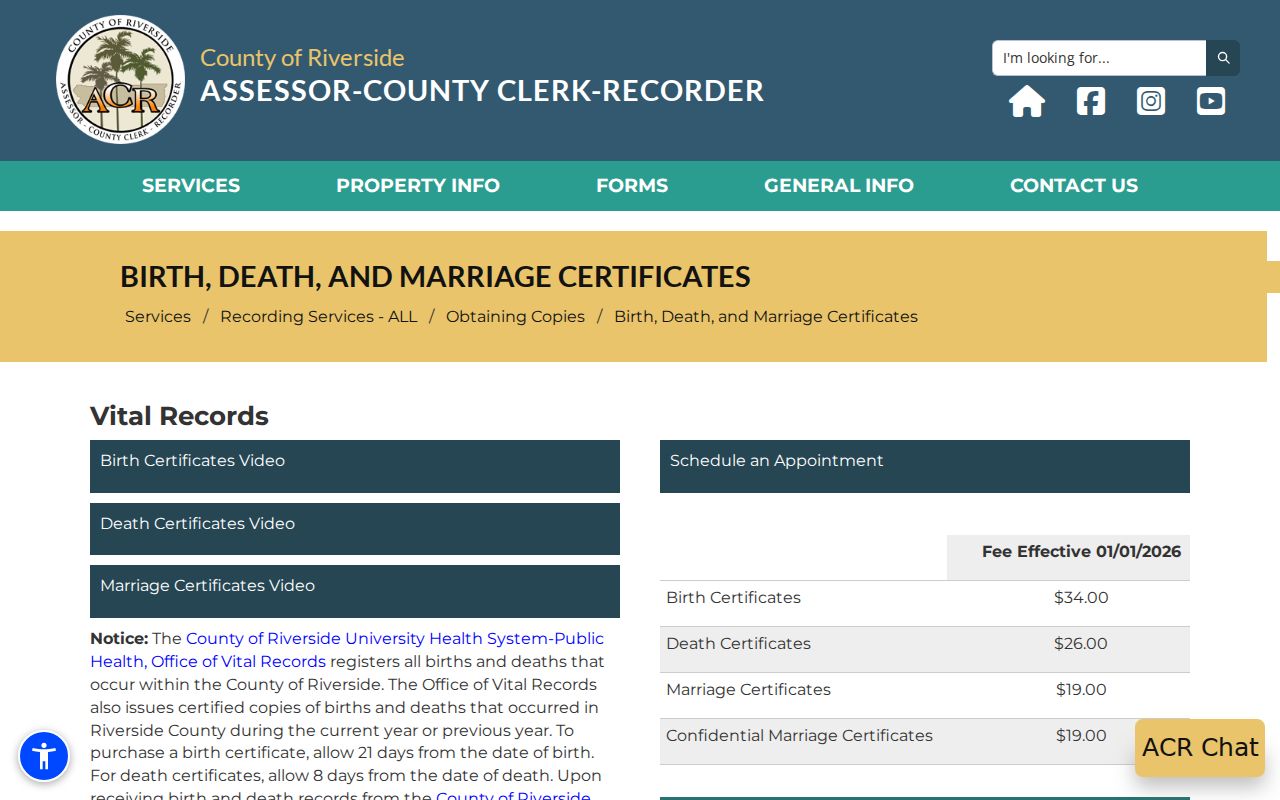
The county application image reinforces the split between a request form, eligibility, and the official copy held by the custodian.
Palm Desert License and Custody Records
Some Palm Desert resident questions are really affiliation questions. California Department of Consumer Affairs license search can confirm a public professional license record. The Secretary of State business search can show entity name, status, addresses, agents, and filed statements. These records connect a person to a public role or entity, not to a private home. The distinction matters when a name is common.
County custody information is separate. The Riverside County Sheriff Inmate Information System searches by booking number or name with optional birth date and sex fields. CIRIS handles California state custody, and Megan's Law is the official public registry with statutory category limits. Each result is time-sensitive or purpose-limited, and each agency warns that a public screen is not a complete legal record.
For a license clue, use the California DCA license search. For a custody clue, use the Riverside Sheriff locator or the state channel named by the agency. A result should be matched by role, date, county, and name variant before it is treated as a Palm Desert lead.
The public license screen is the relevant source for a professional-status clue.
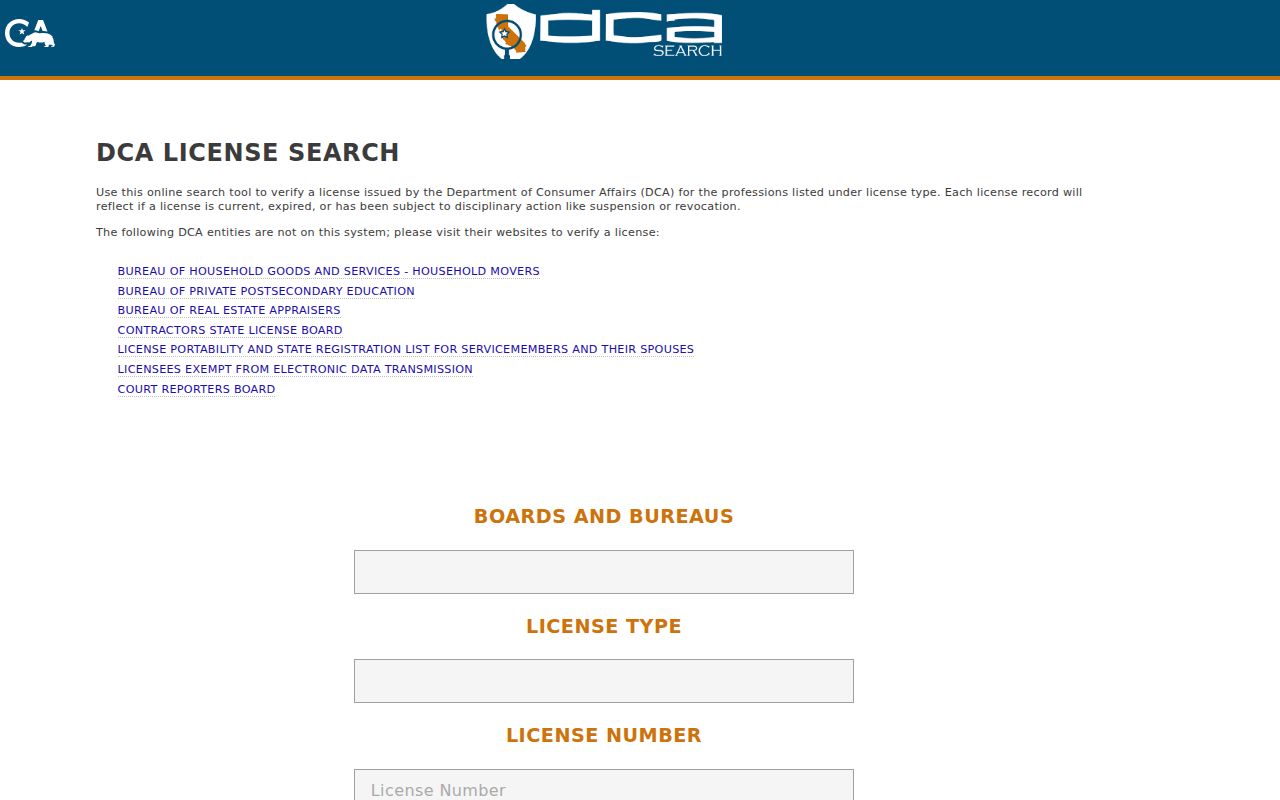
That screen illustrates why an affiliation record should be kept separate from a parcel or residence conclusion.
Palm Desert Public Safety Records
The Riverside County inmate system, CIRIS, and California's Megan's Law site answer narrow public-safety questions. They do not form a general Palm Desert residents directory. The Sheriff warns that custody data should not be relied on for legal action. CIRIS says its information can contain errors or omissions. Megan's Law disclosure varies by statutory category, so absence from a public map does not prove that a person is not registered.
Historical Society material, court files, vital records, and municipal records may identify the same name in a different context. Keep a custody result in its own record class and do not merge it with a parcel or household based only on a matching name.
The California Megan's Law search is the official public channel documented in the research.
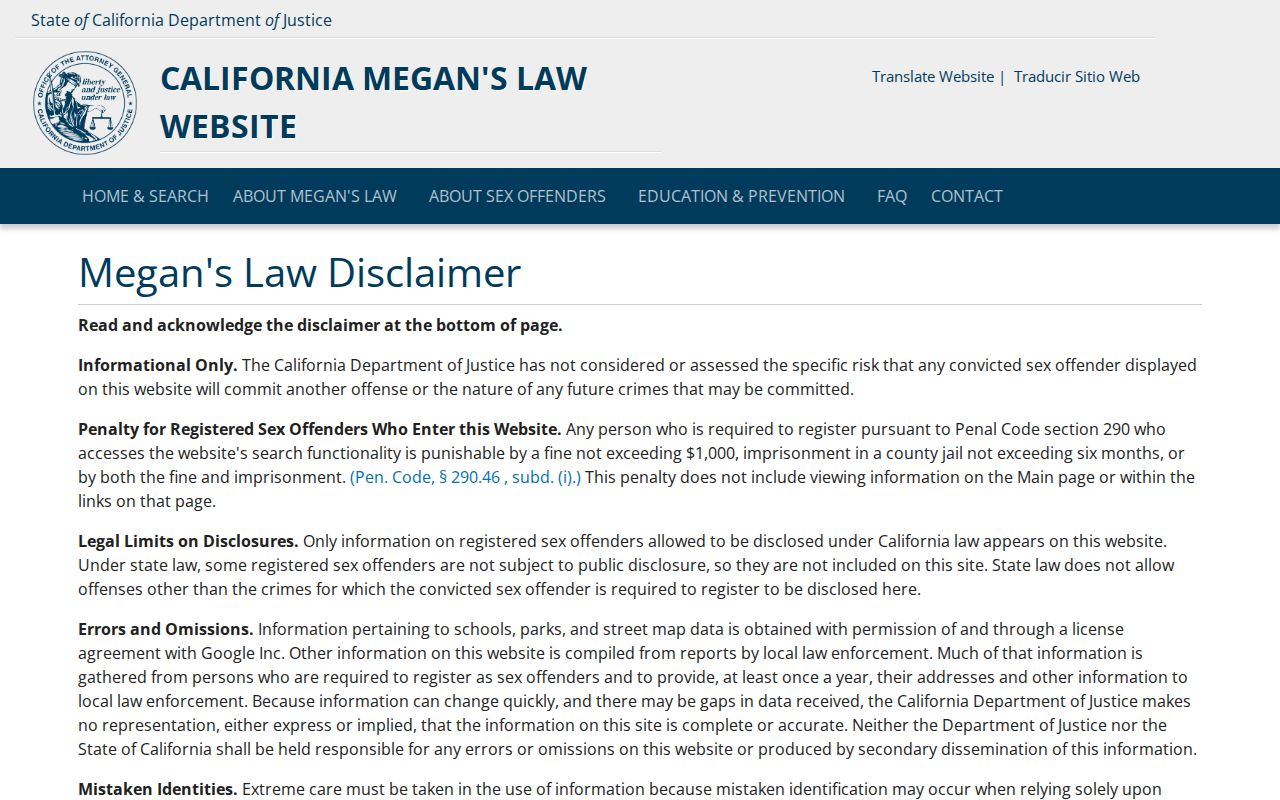
The warning on an official safety lookup is part of the result and should travel with any private, lawful research note.
The Riverside County Sheriff inmate information system is a separate custody channel.
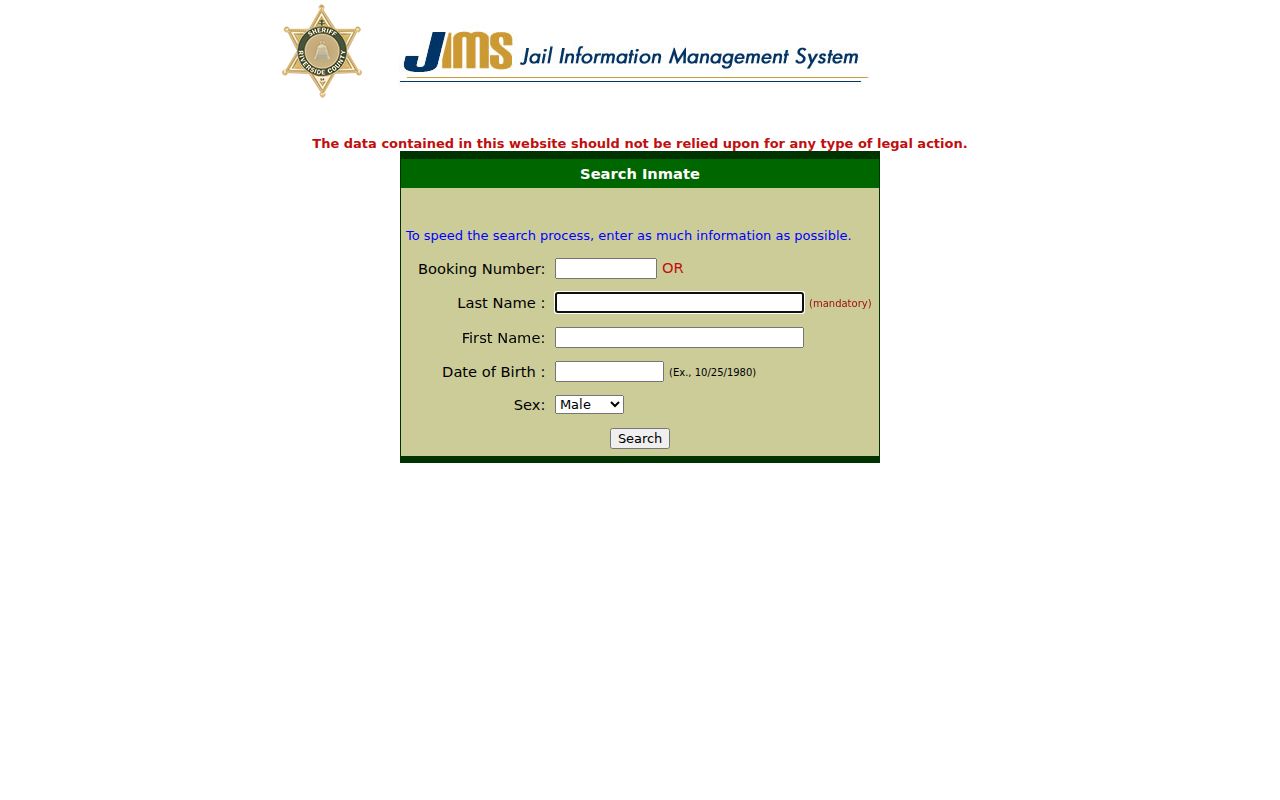
A booking result can change, so the Sheriff locator's own warning remains part of the source context.
Palm Desert Library History
Palm Desert opened its own city-operated library on July 1, 2024. Current local inquiries belong at the Palm Desert Library, while legacy material may still sit in Riverside County or regional partner systems. The catalog can be searched by title, author, and keyword. The posted hours are Sunday 1-5, Monday through Wednesday 10-8, and Thursday through Saturday 10-6. The library does not publish a verified year-by-year list of city directories, reverse directories, newspapers, or genealogy databases.
Ask staff to check Palm Desert history, family names, newspapers, yearbooks, and regional place labels. The Historical Society community-resource entry is a strong next step when a catalog search finds an archive lead but not a shelf location.
The Palm Desert Library catalog and contact page is the appropriate source for current hours and holdings questions.
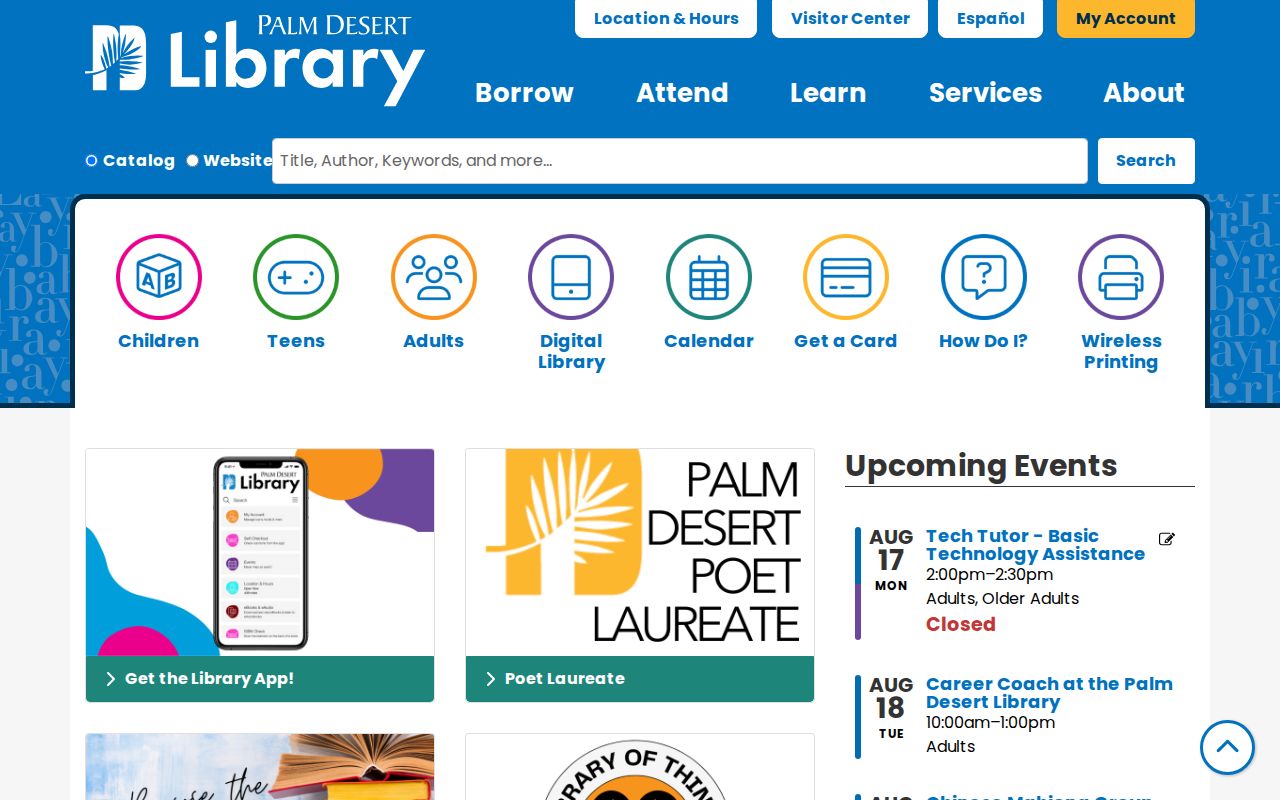
The library view points to a local reference channel, while the actual volume or database access still needs confirmation from staff.
Privacy Can Break the Palm Desert Trail
California's Safe at Home program can place a substitute mailing address in new public records for eligible participants. Voter data, DMV information, utility accounts, and household-member details have their own limits. A missing address is therefore not proof that a record is false or that a person has no Palm Desert connection.
The California DROP platform gives residents a centralized way to send deletion and opt-out requests to registered data brokers. The Attorney General reported more than 225,000 registrations in its first six weeks and said processing by registered brokers begins August 1, 2026. Removing a commercial profile does not erase a Riverside deed, assessment, court file, or vital record held by its custodian.
Lawful personal use. Palm Desert records can support family history, estate research, civic review, reconnection with consent, and personal safety awareness. Do not use a name or address trail to stalk, harass, intimidate, or harm anyone.
Verify a Palm Desert Solicitation
Deed-copy mailers, property-fraud alarms, unclaimed-property demands, family-emergency calls, and jury-duty threats can borrow real names and parcel facts. The safest check is channel separation. Find the official Riverside County, Palm Desert, California, or court web address on your own, then ask whether the cited instrument, parcel, case, or claim exists. Do not use the phone number or link supplied by the message as the only proof.
A county index, a court register, a City Clerk response, and a state claim portal each answer a different question. Preserve the letter, date, payment request, caller details, and document number. Report a business solicitation to the California Attorney General, fraud to the FTC, and an immediate safety threat to emergency services or the Sheriff's office.
The FTC fraud-reporting channel is an independent check for common records-related fraud.